


When people who investigate outbreaks for a living are asked what they won’t eat, the answers are rarely exotic. A New York Times column published this week asked food safety experts what they personally avoid, and the list included ordinary grocery items: raw sprouts, deli meat, packaged salads, raw shellfish, and precut melon. This guide covers four of them, why the risk is real, who needs to be most careful, and safer ways to enjoy these foods, using guidance from the CDC, FDA, and USDA. The goal isn’t to scare you. For most healthy adults the risk from any one of these foods is low, but it is higher for young children, adults 65 and older, pregnant people, and people with weakened immune systems.
Food safety experts most often name four foods: raw sprouts, deli meat, packaged salad greens, and raw shellfish. They share one problem: they’re eaten without a “kill step” like cooking, and contamination can’t be seen, smelled, or reliably washed off. Safer swaps include cooking sprouts thoroughly, heating deli meat to 165°F (steaming hot), cooking greens or washing whole heads of lettuce yourself, and cooking shellfish. Pregnant people, older adults, young children, and people with weakened immune systems face the highest risk.
Why Do Food Safety Experts Avoid Raw Sprouts?
Seeds sprout in warm, humid conditions that also help bacteria grow, and rinsing doesn’t remove them. Cooking does.
According to the FDA, sprouts are grown from seeds and beans under warm, humid conditions that are also ideal for Salmonella, Listeria, and E. coli. Rinsing sprouts won’t remove the bacteria, and home-grown sprouts carry the same risk. The FDA advises cooking sprouts thoroughly, and says children, older adults, pregnant people, and people with weakened immune systems should avoid raw or lightly cooked sprouts entirely. When you eat out, ask that raw sprouts be left off sandwiches and salads. It’s an ongoing food safety problem: MedicalDaily reported that two U.S. sprout outbreaks ended in November after sickening 111 people, both traced to contaminated seed lots, and noted that sprouting seeds aren’t covered under the FDA’s produce safety rule.
Safer swap: Add sprouts to a stir-fry or soup so they’re cooked, or use another crunchy topping such as shredded cabbage or sliced cucumber.
Why Do Food Safety Experts Avoid Deli Meat?
Listeria can grow at refrigerator temperatures. Heat deli meat to 165°F or steaming hot, especially if you’re pregnant, 65+, or immunocompromised.
The CDC calls Listeria a hardy germ that can remain on surfaces like meat slicers, and on foods, even at refrigerator temperatures. That’s why cold cuts sliced at a deli counter keep appearing in outbreaks, including a 2024 outbreak. The CDC says people who are pregnant, 65 or older, or have a weakened immune system should always avoid meats sliced at deli counters unless they’re heated to an internal temperature of 165°F or until steaming hot just before serving. During pregnancy, listeriosis can cause miscarriage, stillbirth, premature delivery, or a life-threatening infection in the newborn. The USDA notes that in healthy people it usually causes mild symptoms lasting a few days, but it can be deadly for those with weakened immune systems and older adults.
Safer swap: Heat sliced deli meat until steaming, or choose cooked leftovers such as roasted chicken for sandwiches. For more ideas, see our quick dinner ideas.
Why Do Food Safety Experts Avoid Packaged Salads?
Greens from many heads are cut, washed, and bagged together, so one contaminated batch can reach many bags, and washing can’t remove all germs.
Leafy greens are a repeat source of outbreaks. The CDC says the safest produce is cooked and the next safest is washed, but no washing method can remove all germs. If a package is labeled “ready to eat,” “triple washed,” or “no washing necessary,” you don’t need to wash it again, per the CDC and FDA. Some experts prefer whole heads of lettuce they rinse at home, because greens from many heads are processed in big batches and one problem can spread widely. That makes food safety a purchase decision as much as a kitchen one: check for recalls, and buy bagged greens cold.
Safer swap: Buy whole heads and discard the outer leaves, rinse under running water while rubbing the leaves, and dry them with a clean towel. Refrigerate greens within 2 hours, or within 1 hour if they’ve been above 90°F, as the CDC advises.

Why Do Food Safety Experts Avoid Raw Shellfish?
Oysters, clams, and scallops can carry Vibrio and norovirus, and lemon juice or hot sauce doesn’t kill them. Only cooking does.
Oysters and other shellfish filter water and can concentrate germs. According to the CDC, about 80,000 cases of vibriosis occur in the U.S. each year, about 52,000 of them from contaminated food, and most people get it from raw or undercooked shellfish, particularly oysters. The California Department of Public Health notes that people with liver disease, cancer, diabetes, or weakened immune systems are more likely to get very sick, that adding hot sauce or lemon juice doesn’t kill bacteria, and that thorough cooking does. Raw shellfish can also carry norovirus. On this list, food safety experts say the shellfish risk is easiest to avoid, because cooking solves it.
Safer swap: Order oysters, clams, and scallops cooked all the way through, such as steamed, baked, or fried.
What About Precut Fruit and Other Risky Foods?
Food safety experts also flag precut melon because you can’t know how it was handled. Buy it cold, keep it refrigerated, and eat it quickly.
Precut melon was the fifth food on the New York Times list. The FDA advises choosing pre-cut produce, such as half a watermelon or bagged greens, only when it’s refrigerated or surrounded by ice. Cut your own melon when you can, wash the rind first, and refrigerate leftovers promptly.
How Can You Follow Food Safety Advice at Home?
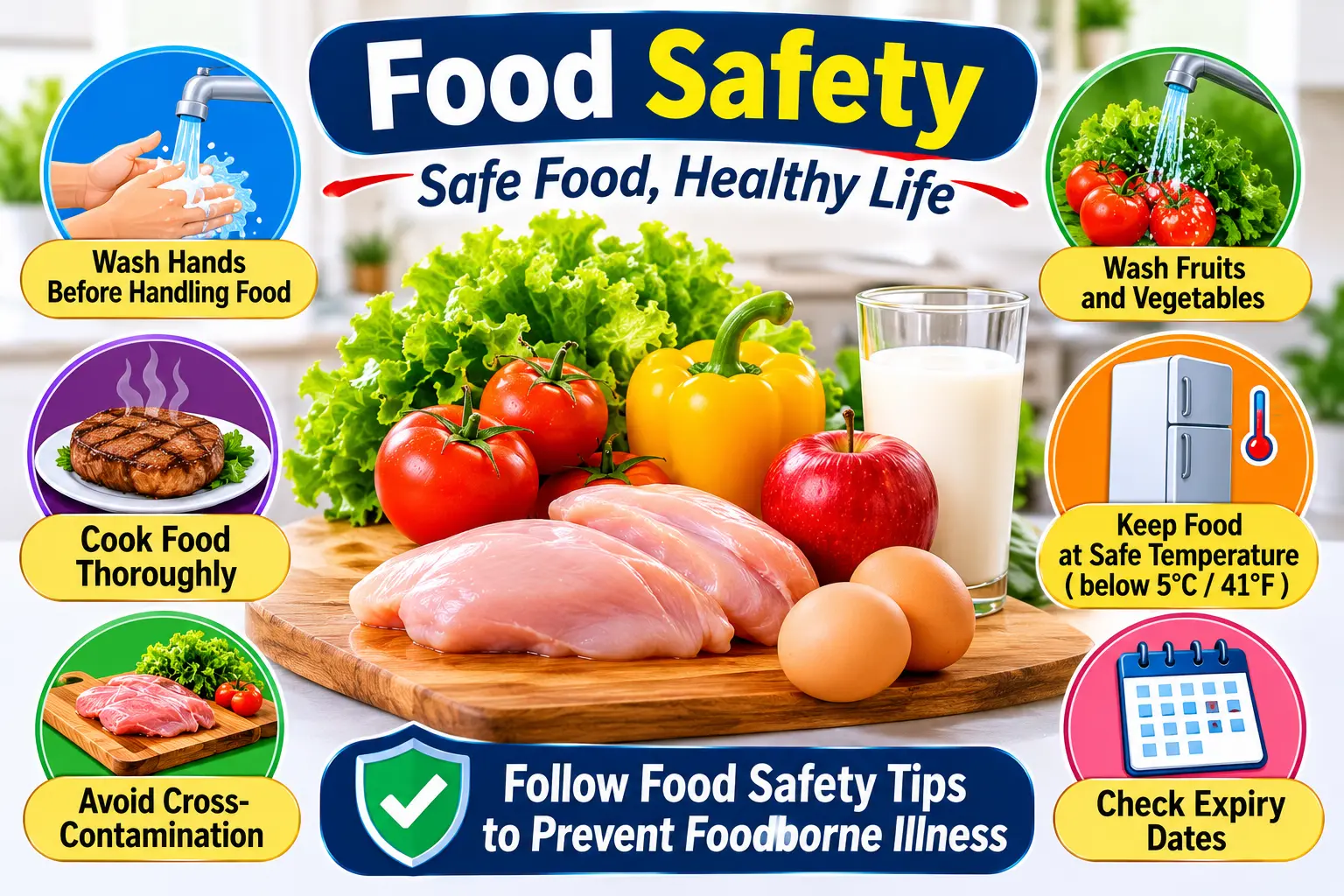
Cook high-risk foods, keep cold foods cold, wash hands and surfaces, and check recalls. Washing alone isn’t a kill step.
- Cook sprouts, shellfish, and (for high-risk groups) deli meat.
- Wash your hands with soap and warm water for at least 20 seconds before and after handling food.
- Keep it cold: refrigerate perishables promptly.
- Separate raw seafood and its juices from ready-to-eat foods.
- Check recalls on the FDA and CDC websites.
Extra care matters most during pregnancy, as covered in our women’s health guide, and for older adults, as covered in our healthy aging tips. Supplements don’t make risky food safe, as our immune health supplements guide explains. For meal planning with safe storage habits, see our sports nutrition guide.
Frequently Asked Questions
Do these foods have to be avoided by everyone?
No. For most healthy adults, the risk from any one food is low, but it is higher for pregnant people, older adults, young children, and people with weakened immune systems, who are advised to avoid several of them.
Does food safety advice differ for pregnant women?
Yes. Pregnant people are advised to avoid raw sprouts, raw shellfish, and deli meat unless it’s heated to steaming hot, because listeriosis can seriously harm a pregnancy.
Can washing make these foods safe?
Washing reduces germs but doesn’t eliminate them. Cooking is the step that reliably kills bacteria and viruses.
Key Takeaways
- Raw sprouts, deli meat, packaged salads, and raw shellfish are eaten without a cooking step.
- Good food safety habits mean heating deli meat to 165°F, cooking sprouts and shellfish, and handling bagged greens carefully.
- Risk is highest for pregnant people, adults 65 and older, young children, and people with weakened immune systems.
- Washing helps but can’t remove every germ, so cooking is the reliable fix.
Conclusion
You don’t have to give up these foods forever to follow expert-level food safety habits. Cook sprouts and shellfish, heat deli meat when you’re in a higher-risk group, and treat packaged greens with care. Small changes lower your risk without making meals complicated. For more wellness guides, visit our homepage.
