


Introduction
Everyone feels mental anxiety before an exam, a job interview or a big decision. Anxiety becomes a problem when the worry stops fading, spills into sleep and relationships, and arrives with a body that feels permanently on alert. Recent data suggest more people are noticing it: CDC survey data show adult anxiety symptoms rose from 15.6% in 2019 to 18.2% in 2022, and an October 2026 study of young adults found nearly 1 in 5 feel anxious every day. This guide explains the emotional and physical signs, how clinicians tell ordinary stress from an anxiety disorder, and practical steps to feel better, using NIMH, the American Psychiatric Association, CDC, and Mayo Clinic information. It is general education, not a diagnosis.
What Is Mental Anxiety, and Is It Different From Normal Stress?
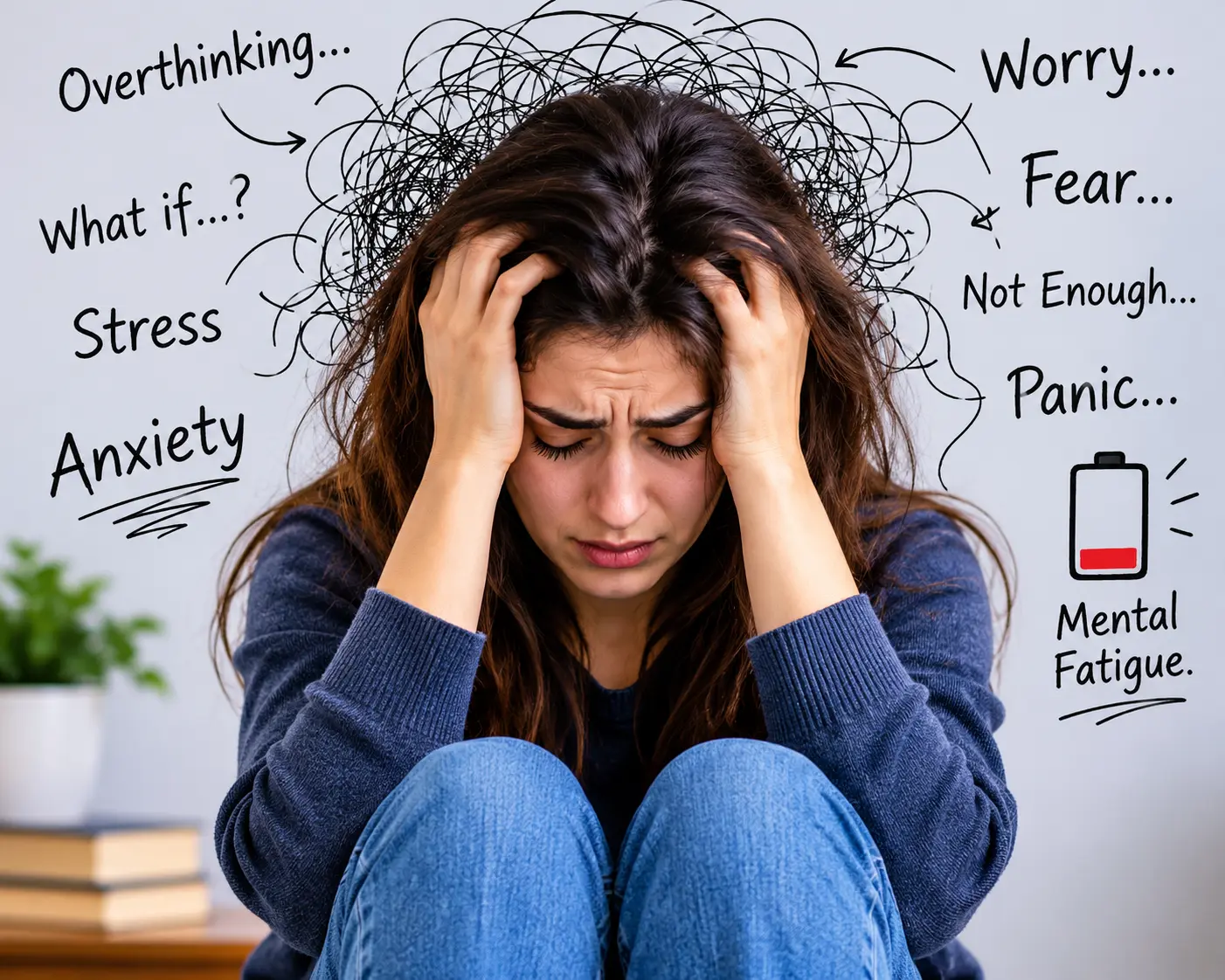
Mental anxiety is the worry, fear and racing thoughts side of anxiety. Stress usually has a clear trigger and fades; anxiety lingers even when the trigger is gone.
“Mental anxiety” is an everyday phrase rather than a formal diagnosis. Clinicians talk about anxiety and anxiety disorders, which include generalized anxiety disorder, panic disorder, social anxiety disorder and phobias. People tend to use “mental anxiety” to describe the thinking part of anxiety, such as constant what-ifs and fear of the worst, as opposed to the physical part. In practice, the two are linked, and most people experience both. The American Psychiatric Association says symptoms count as a disorder when they are out of proportion to the situation, persistent and disruptive to daily functioning.
What Are the Most Common Mental Anxiety Symptoms?
Common mental anxiety symptoms are excessive worry, trouble controlling it, feeling on edge, irritability, poor concentration, fatigue and disturbed sleep.
According to the NIMH guide to generalized anxiety disorder, people may:
- Worry excessively about everyday things such as work, health, money or family
- Find it hard to control their worries
- Feel restless, keyed up or “on edge”
- Feel irritable
- Have trouble concentrating, or find their mind goes blank
- Feel tired easily
- Have trouble falling or staying asleep
Other patterns many people describe include expecting the worst, constantly seeking reassurance, avoiding situations that trigger worry, and difficulty making decisions. Symptoms often fluctuate and tend to worsen during stressful periods such as illness, exams or conflict.
What Are the Physical Symptoms of Anxiety?
Anxiety can cause a pounding heart, rapid breathing, sweating, trembling, muscle tension, headaches, stomach problems and dizziness.
The body’s alarm system releases stress hormones, which is why anxiety feels physical. NIMH lists symptoms such as:
- Racing or pounding heartbeat and shortness of breath
- Sweating, feeling lightheaded or out of breath
- Muscle aches and tension
- Stomachaches, nausea or frequent trips to the bathroom
- Headaches
- A lump in the throat or trouble swallowing
- Trembling or shaking
Because these feelings overlap with medical problems, never assume chest pain or breathlessness is “just anxiety.” Get them checked. The Mayo Clinic’s anxiety overview explains why doctors often rule out physical causes first.
How Do Mental Anxiety Symptoms Differ in Panic Attacks and Other Anxiety Disorders?
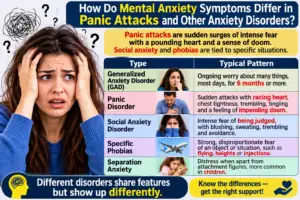
Panic attacks are sudden surges of intense fear with a pounding heart and a sense of doom. Social anxiety and phobias are tied to specific situations.
Different disorders share features but show up differently:
| Type | Typical pattern |
|---|---|
| Generalized anxiety disorder | Ongoing worry about many things, most days, for 6 months or more |
| Panic disorder | Sudden attacks with racing heart, chest tightness, trembling, tingling and a feeling of impending doom |
| Social anxiety disorder | Intense fear of being judged, with blushing, sweating, trembling and avoidance |
| Specific phobias | Strong, disproportionate fear of an object or situation, such as flying, heights or injections |
| Separation anxiety | Distress when apart from attachment figures, more common in children |
Not everyone who has a panic attack has panic disorder, and panic attacks can also occur with depression or PTSD.
How Do You Know When Anxiety Becomes a Disorder?
A clinician may diagnose generalized anxiety disorder when excessive worry occurs more days than not for at least 6 months, with several symptoms and daily impairment.
For adults, NIMH describes generalized anxiety disorder as ongoing worry that is hard to control, together with at least three of these symptoms: feeling restless or on edge, fatigue, trouble concentrating, irritability, muscle tension or sleep problems. A provider will take your history and may conduct a physical exam to make sure another condition is not causing the symptoms.
The numbers show how common this is:
- About 19.1% of U.S. adults had any anxiety disorder in the past year, and 31.1% at some point in life, according to NIMH statistics
- 2.7% had generalized anxiety disorder in the past year, with women affected more than men
- About 19% of adults say a health professional has told them they had an anxiety disorder, per the CDC’s mental health data
- Nearly 1 in 5 U.S. young adults aged 18 to 25 reported daily anxiety in 2024, up from 15% in 2020, according to a study reported by HealthDay
What Causes Mental Anxiety?
Mental anxiety comes from a mix of genetics, brain chemistry, personality, life experiences and current stress. No single cause explains every case.
NIMH notes that anxiety can run in families, and researchers link it to a combination of genes, biology and environment. Traumatic events and long-term stress raise the risk. Common contributors include:
- Ongoing stress from work, money, relationships or caregiving
- Past trauma or adverse childhood experiences
- Other conditions such as depression, chronic pain or heart conditions
- Substances: too much caffeine, alcohol, nicotine and some medicines
- Poor or short sleep
- Health conditions such as an overactive thyroid, which a doctor can check
The American Psychiatric Association’s 2026 Healthy Minds poll found many Americans reporting anxiety about current events, personal finances and emerging technology, a reminder that the wider environment matters too. Read the poll summary here.
When Should You See a Doctor or Seek Urgent Help?
See a doctor if anxiety lasts weeks, disrupts sleep, work or relationships, or comes with panic attacks. Seek urgent help for chest pain or thoughts of self-harm.
Make an appointment with a primary care provider or mental health professional if:
- Worry is present most days and hard to control
- You avoid places, people or tasks because of fear
- You are using alcohol or other substances to cope
- Anxiety is accompanied by low mood or hopelessness
- Physical symptoms keep recurring and you want them checked
Seek urgent help for chest pain, severe breathlessness, fainting, or thoughts of harming yourself. In the U.S., call or text 988 (the Suicide & Crisis Lifeline, 988lifeline.org) or call 911 in a life-threatening situation. If you live elsewhere, contact your local emergency number or a trusted person right now. You do not need to wait until things are “bad enough” to ask for support.
How Is Anxiety Treated?
The main treatments are psychotherapy, especially cognitive behavioral therapy (CBT), and medication, often combined. Healthy habits support treatment but do not replace it.
According to NIMH and the American Psychiatric Association:
- Psychotherapy: CBT helps you notice anxious thinking patterns, build coping skills and gradually face feared situations
- Medication: prescribed by a clinician; it does not cure anxiety but can give significant relief, and the right choice depends on the person
- Support groups: sharing experiences with others can reduce isolation
- Lifestyle changes: NIMH says reducing caffeine, getting enough sleep, exercising, and practicing mindfulness or meditation can lower symptoms when paired with standard care
Treatment works for many people, yet a large share never receive it. If cost or access is a barrier, ask your primary care provider about low-cost options, community clinics or telehealth.
What Can You Do Today to Reduce Mental Anxiety Symptoms?
Move your body, protect your sleep, cut back on caffeine, slow your breathing and talk to someone you trust. Small daily habits add up.
Practical steps that fit alongside professional care:
- Exercise regularly. Even a brisk walk can ease tension. Build a routine with a simple weekly workout routine and add strength training for confidence and energy.
- Protect your sleep. Keep a regular bedtime and wind down without screens; see our sleep and recovery guide (replace with your real URL).
- Cut back on caffeine and energy drinks, which can intensify jitteriness and a racing heart; see our guide to energy drinks and heart health (replace with your real URL).
- Practice slow breathing or mindfulness for a few minutes a day, such as breathing in for four counts and out for six
- Write down worries and set aside a short “worry time” so they do not spread across the day
- Limit alcohol and avoid using it to calm down
- Eat regular meals and stay hydrated; see our healthy eating guide (replace with your real URL)
- Reach out. Tell a friend or family member how you feel, and visit the Fitness Groom homepage for more wellness guides.

Frequently Asked Questions
What are the first signs of anxiety?
Persistent worry, feeling on edge, trouble sleeping, irritability, muscle tension and difficulty concentrating.
Can mental anxiety cause physical symptoms?
Yes. Anxiety can cause a racing heart, sweating, trembling, stomach upset and headaches because the body’s stress response is activated.
How long does anxiety have to last to be a disorder?
For generalized anxiety disorder, excessive worry on more days than not for at least 6 months, along with impairment in daily life.
Is anxiety curable?
Many people improve substantially with therapy, medication or both. Symptoms can come and go, so ongoing coping skills help.
Can exercise help with anxiety?
Yes. NIMH says exercise can reduce anxiety symptoms and enhance the effects of therapy, though it is not a replacement for treatment.
Conclusion
Anxiety shows up in the mind and the body: relentless worry, restlessness, poor sleep, a racing heart and tense muscles. It is common, it is treatable, and it is not a character flaw. If symptoms last for weeks, make daily life harder or come with panic, talk to a doctor or mental health professional. Start with small steps today: move your body, protect your sleep, ease off caffeine and tell someone how you feel. If you are ever in crisis or worried about your safety, contact your local emergency services. Share this guide with someone who might need it.
