


Share This Article
Introduction
If you live in Pennsylvania, the measles outbreak Pennsylvania health officials have been tracking since April isn’t background noise anymore, it’s the state with the most measles cases in the entire country. Neighbors are asking whether their kids’ vaccine records are up to date, school nurses are fielding more calls than usual, and for the first time in 35 years, the Commonwealth has recorded measles deaths. This guide pulls together the most current numbers from the Pennsylvania Department of Health and the CDC, explains how the virus spreads, and lays out exactly what to do to keep your household safe while the outbreak is still active.
What Is Happening With the Measles Outbreak in Pennsylvania Right Now?
The measles outbreak Pennsylvania is experiencing has grown to 676 confirmed cases across 37 counties as of September 11, 2026, making it the largest in the U.S. this year.
The outbreak began in late April 2026, first concentrated in Lancaster County before spreading west into counties like Butler and Westmoreland. Pennsylvania recently overtook South Carolina as the state with the most reported cases nationwide, and health officials believe the real number is likely higher, since mild or unreported cases aren’t always captured in official counts. The Pennsylvania Department of Health measles dashboard is updated regularly and is the most reliable place to check current case counts by county.
How Many Measles Cases Are There in Pennsylvania in 2026?
As of the latest state update, there are 676 confirmed measles cases in Pennsylvania, up from 460 in mid-August — a sign the outbreak is still active, not winding down.
For context on how quickly this has escalated:
- Mid-August 2026: 460 cases in 31 counties
- Late August 2026: 624 cases in 37 counties
- September 11, 2026: 676 cases in 37 counties
Nationally, the CDC reported 3,294 confirmed measles cases across 47 states as of September 10, 2026 — already surpassing the 2,289 cases recorded for all of 2025. You can track the national trend on the CDC’s measles data page.
Which Pennsylvania Counties Have Confirmed Measles Cases?
Measles cases have now been confirmed in 37 of Pennsylvania’s 67 counties, with Lancaster County remaining the epicenter of the outbreak.
Lancaster County alone has reported over 185 cases, making it one of the largest single-county outbreaks in the U.S. this year. The virus has since spread into Western Pennsylvania, including newer case counties like Butler, Westmoreland, Centre, Jefferson, and Lycoming. If you live in an affected county, checking the state dashboard before travel, school events, or large gatherings is a smart precaution.
Has Anyone Died From Measles in Pennsylvania?
Yes — Pennsylvania has confirmed three measles-related deaths in 2026, the state’s first measles fatalities in 35 years, and all three individuals were unvaccinated.
Two deaths were confirmed in Lancaster County in August 2026, and a third was reported on September 12, 2026, involving a 40-year-old Jefferson County resident. According to reporting from CIDRAP, these mark the first U.S. measles deaths recorded in 2026. American Academy of Pediatrics president Dr. Andrew Racine called the losses “a stark reminder” that measles, though preventable, can still be deadly — a sobering fact driving renewed interest in vaccination across the state.
What Are the Symptoms of Measles You Should Watch For?
Measles typically starts with fever, cough, runny nose, and red, watery eyes, followed a few days later by a red rash that begins on the face and spreads down the body.
Key symptom details, according to the Mayo Clinic:
- Symptoms usually appear 7–21 days after exposure
- High fever (can spike above 104°F) often precedes the rash by 3–5 days
- Tiny white spots inside the mouth (Koplik spots) can appear before the rash
- The rash spreads from the head and face downward over several days
- Complications can include pneumonia, ear infections, and in rare cases, brain swelling
If you or your child develop these symptoms and may have been exposed during the measles outbreak Pennsylvania residents are dealing with, call your provider before walking into a waiting room, so the office can take precautions to avoid exposing other patients.
How Does Measles Spread, and Who Is Most at Risk?
Measles is one of the most contagious viruses known, spreading through airborne droplets and remaining infectious in a room for up to two hours after an infected person leaves.
Unvaccinated individuals — especially infants too young for the MMR vaccine and people with weakened immune systems — face the highest risk. Nationally, the CDC reports that about 94% of this year’s measles cases have occurred in unvaccinated people. For general background on transmission and global trends, the World Health Organization’s measles fact sheet is a useful reference.
Does the MMR Vaccine Protect Against the Pennsylvania Measles Outbreak?
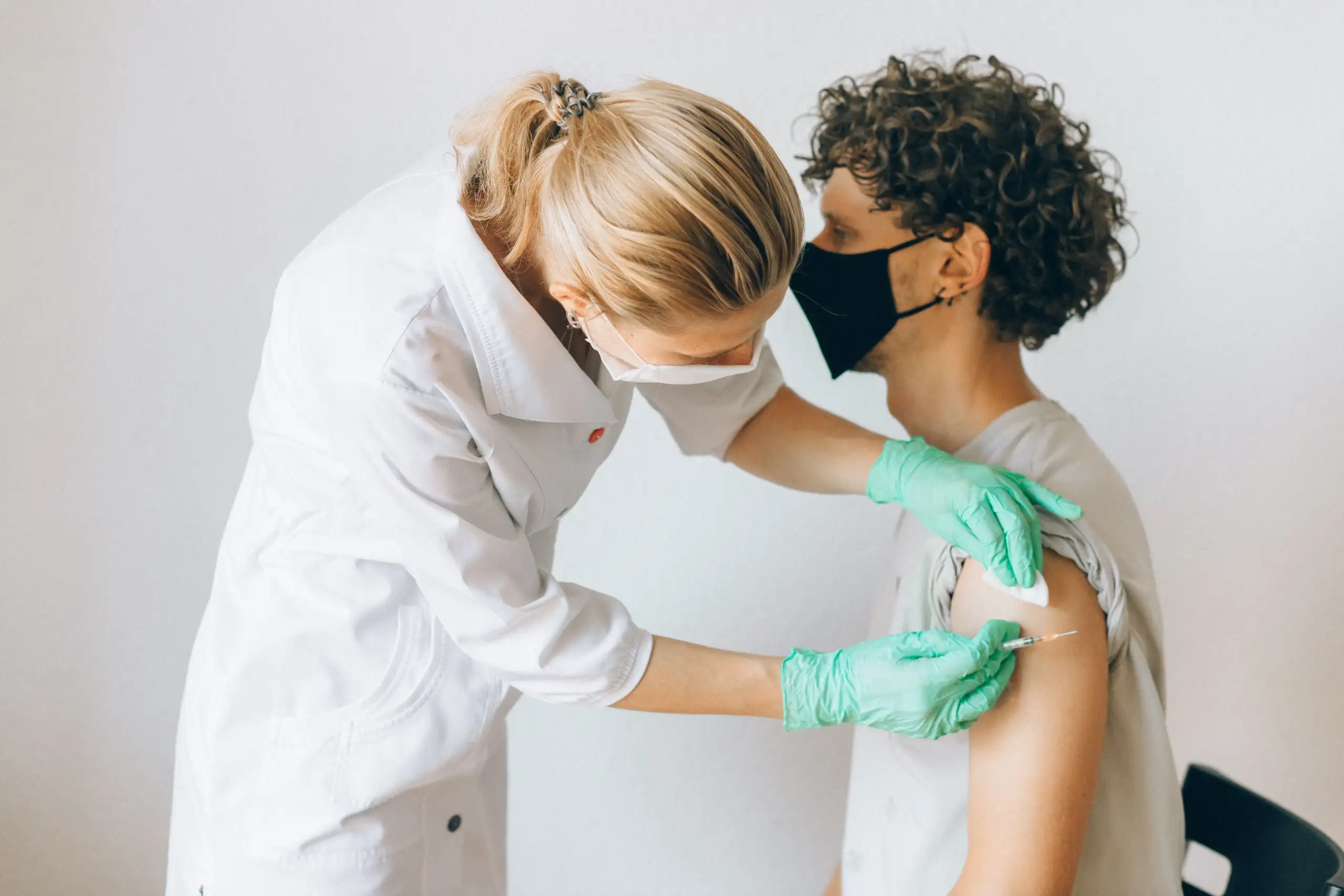
Yes — two doses of the MMR vaccine are about 97% effective at preventing measles, and vaccinated people who do get infected typically have much milder illness.
Of Pennsylvania’s 676 cases, only four occurred in fully vaccinated individuals, and none of those four required hospitalization. That gap is doing a lot of the talking here: across decades of data, MMR remains the single most effective tool against outbreaks like this one. Despite that, national kindergarten MMR coverage has slipped from about 95% in 2019–2020 to roughly 92% in 2025–2026 — below the 95% threshold needed for herd immunity, which helps explain why outbreaks like Pennsylvania’s have been able to take hold. Healthline’s measles overview is a solid plain-language resource if you want to review vaccine schedules and immunity basics with your family.

What Should You Do If You Think You’ve Been Exposed to Measles?
Call your healthcare provider or Pennsylvania’s measles hotline before visiting in person, isolate from others, and check your vaccination records.
Practical steps:
- Call ahead — don’t walk into an ER or clinic waiting room unannounced
- Call the PA Department of Health hotline at 877-PA-HEALTH (877-724-3258) with questions
- Check your (or your child’s) MMR vaccination history
- Stay home from work, school, or daycare if you’re symptomatic
- Watch for fever and rash for up to 21 days after possible exposure
How Can Families Stay Healthy During the Pennsylvania Measles Outbreak?
The most effective protection during the measles outbreak Pennsylvania families are navigating is a confirmed, up-to-date MMR vaccination — supported by everyday habits that keep your whole household resilient.
A few practical, non-medical habits worth reinforcing at home while the outbreak is active:
- Confirm MMR vaccination status for every family member, including adults born after 1957
- Keep sick children home and away from unvaccinated infants or immunocompromised relatives
- Support your family’s overall immune resilience through diet (replace with your real post URL)
- Prioritize consistent sleep and recovery (replace with your real post URL)
- Stay on top of hydration, especially during illness (replace with your real post URL)
- Talk to a pediatrician or primary care provider about catching up on delayed vaccine doses
Frequently Asked Questions
Is the measles outbreak in Pennsylvania still growing? Yes. Cases rose from 460 in mid-August to 676 by September 11, 2026, and Pennsylvania now leads the U.S. in confirmed cases.
How many people have died in the Pennsylvania measles outbreak? Three people have died — two in Lancaster County and one in Jefferson County — all unvaccinated, as of September 2026.
Can vaccinated people get measles? Rarely. Only 4 of Pennsylvania’s 676 cases were in fully vaccinated individuals, and none needed hospitalization.
Where can I check current measles cases by county in Pennsylvania? The PA Department of Health’s measles dashboard is updated regularly with case, hospitalization, and county-level data.
Conclusion
The measles outbreak Pennsylvania is currently facing is the largest in the country in 2026, with 676 confirmed cases, 37 affected counties, and three deaths — all in unvaccinated residents. The data is consistent with decades of public health evidence: MMR vaccination remains the most reliable protection, both for individuals and for community immunity overall. If your family’s vaccine records aren’t current, now is a good time to check with your provider. Bookmark the state’s official measles dashboard and check back as this situation continues to develop.
