


Vitamin D is a fat-soluble vitamin that your body makes when your skin is exposed to sunlight, and it also acts like a hormone once your body converts it. Most people know it is good for bones, but health authorities also link adequate levels to immune function and other areas. This guide explains the main vitamin D benefits, what remains uncertain, who tends to run low, how much you need, and why more isn’t always better, based on guidance from the NIH, Cleveland Clinic, and Healthline.
The best-established vitamin d benefits are helping your body absorb calcium and phosphorus for strong bones and teeth and supporting normal immune function. Some research links low vitamin D to low mood, but evidence for many other claims is mixed. Most adults need 600 to 800 IU a day, and the upper limit from all sources is 4,000 IU. A blood test is the only way to know if your level is low.
What Are the Main Vitamin D Benefits?
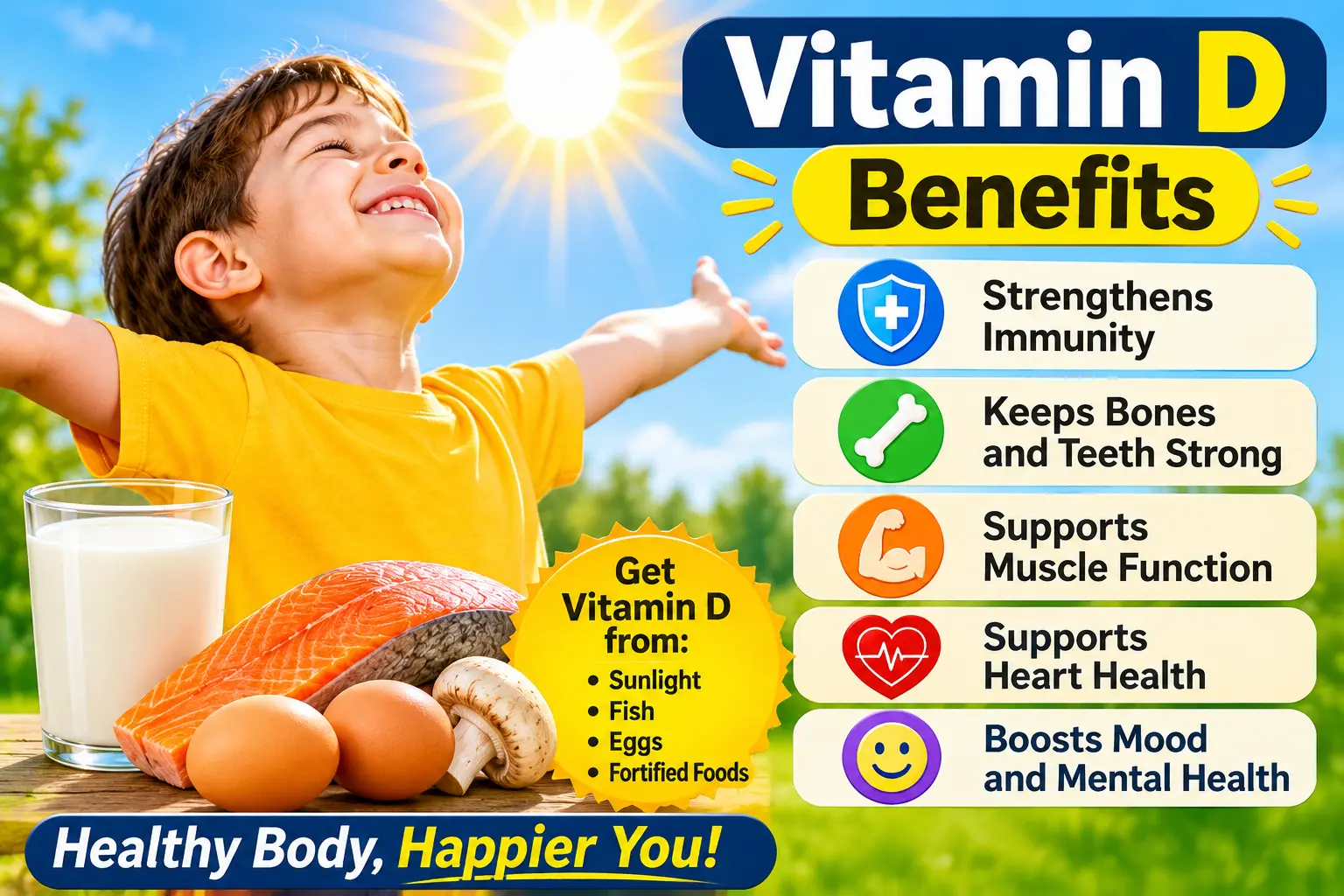
It helps absorb calcium and phosphorus for bones and teeth, supports your immune system, and may play a role in mood and brain health.
According to Cleveland Clinic, vitamin D increases how much calcium your body absorbs, and together they help build and maintain bones, support the immune system, and support brain health. Healthline adds that regulating calcium and phosphorus absorption is probably its most vital job. Key areas include:
- Bones and teeth: Vitamin D is needed for proper growth and development of both. A shortage can weaken bones, and in children it can cause rickets.
- Immune function: Research summarized in a 2020 review describes vitamin D’s effect on immune cells and immune function.
- Mood: Some studies suggest low vitamin D may be linked with depression, but supplements are not a treatment for depression, so talk to your doctor about persistent low mood.
Bone health is where the evidence is strongest. The NIH Office of Dietary Supplements notes that getting enough vitamin D and calcium helps maintain bone health. Other vitamin d benefits are less certain, so be wary of claims that vitamin D prevents or cures disease.
Can the Sun Boost Vitamin D?
Yes. Your skin makes vitamin D in sunlight, but you still need sunscreen, and food or supplements may fill the gap.
In sunny months, many people get enough vitamin D from the sun. Don’t skip sunscreen to get more vitamin d benefits, though. Your body still makes vitamin D when you wear it, and protecting your skin matters, as our skin cancer symptoms guide explains. When sunlight is limited, you’ll need to get vitamin D from food or supplements, and it can be hard to meet your needs from food alone.
Who May Miss Out on Vitamin D Benefits?
People with darker skin or little sun exposure are more likely to run low, especially in winter.
Melanin reduces how much sunlight your skin absorbs, so people with darker skin tones may be more likely to run low, particularly in winter or when they spend little time outdoors. The full picture is still unclear. Healthline notes that African Americans have lower rates of fracture and osteoporosis despite lower total vitamin D on standard tests, and one NEJM study suggests free, active vitamin D may be normal. Conditions such as cystic fibrosis, inflammatory bowel disease, and liver or kidney disease can also affect how your body handles vitamin D, so tell your care team about them.
What Foods Provide Vitamin D Benefits?
Fatty fish like salmon, tuna, and mackerel are among the best sources. Egg yolks, cheese, fortified milk, and UV-exposed mushrooms add some.
The NIH says very few foods naturally contain vitamin D. Fatty fish and fish liver oils are among the best natural sources, while beef liver, egg yolks, and cheese have small amounts. Some mushrooms are exposed to ultraviolet light to raise their content. Many foods are fortified, and fortified milk typically has about 3 mcg (120 IU) per cup. Check the label on yogurt, cereal, and other products, since food is an easy way to get vitamin d benefits when sunlight is limited.
What Are the Signs You May Need More Vitamin D?
Signs are often mild or absent: tiredness, aches, bone or muscle pain, muscle weakness, falls, or fractures. Only a blood test confirms it.
Symptoms of low vitamin D in adults are often mild, and some people have none. Speak with a doctor if you notice:
- Tiredness, aches, and pains
- Persistent bone or muscle pain
- Unexplained muscle weakness
- Repeated falls or fractures
- Signs of rickets in children
The NIH says blood levels of 50 nmol/L (20 ng/mL) or above are adequate for most people, and levels below 30 nmol/L (12 ng/mL) are too low. Testing matters because the vitamin d benefits depend on having enough, not on taking more. For related fatigue questions, see our energy booster supplement guide.
How Much Vitamin D Do You Need to Get Vitamin D Benefits?
Most adults need 600 IU (15 mcg) a day, and 800 IU (20 mcg) after age 70. The upper limit from all sources is 4,000 IU.
The NIH’s recommended daily amounts are:
- Infants (0–12 months): 400 IU (10 mcg)
- Ages 1–70, including pregnancy and breastfeeding: 600 IU (15 mcg)
- Adults over 70: 800 IU (20 mcg)
Some groups, such as the Bone Health and Osteoporosis Foundation, suggest 800 to 1,000 IU for people 50 and older, according to MedlinePlus. The daily upper limit is 4,000 IU (100 mcg) for ages 9 and up, counting food, drinks, and supplements together, though a provider may recommend more for a time to treat a deficiency. To get vitamin d benefits safely, aim for the recommended amount, and see our healthy aging tips and women’s health guide for age-specific needs.
Can You Get Too Much Vitamin D?
Yes, almost always from supplements. Too much can raise blood calcium and cause nausea, weakness, and thirst.
Overdose is unlikely from food or sun, because your body regulates how much it makes from sunlight. Excess vitamin D, called hypervitaminosis D, is rare and usually comes from taking high-dose supplements without a known deficiency. More isn’t better: in a 2019 JAMA trial of healthy adults aged 55 to 70, 4,000 or 10,000 IU a day did not improve bone health and was linked to modestly more bone loss than 400 IU. High vitamin d benefits don’t come from megadoses. Tell your care team right away if you notice increased thirst or urination, nausea, vomiting, confusion, unusual weakness or fatigue, or bone pain, which can signal high calcium.
How Should You Take Vitamin D Supplements?
Take them as directed at the same time each day with a meal that contains fat, and don’t double up if you miss a dose.
Cleveland Clinic advises taking vitamin D by mouth with water, as directed on the label, with a meal or snack, and for best results, with foods that contain fat, such as milk, yogurt, or cheese. If you miss a dose, take it as soon as you can, unless it’s almost time for the next one, and never take a double dose. Store it at room temperature, away from light, and out of reach of children and pets. You may need regular checkups and blood work while taking it.

What Can Interact With Vitamin D Supplements?
Antacids, diuretics, magnesium and phosphorus supplements, some cholesterol and seizure medicines, orlistat, mineral oil, and rifampin can interact.
Cleveland Clinic lists these as common interactions: antacids, diuretics, magnesium supplements, cholesterol medicines such as cholestyramine, colesevelam, or colestipol, seizure medicines such as phenytoin, mineral oil, orlistat, phosphorus supplements, and rifampin. It also advises against taking other non-prescription products that contain vitamin D, calcium, phosphorus, or magnesium, including antacids, unless your care team says it’s OK. Give your provider a full list of your medicines and supplements. For more on how vitamin D fits with other nutrients, see our immune health supplements guide and muscle recovery supplements guide.
Frequently Asked Questions
Do vitamin d benefits include better mood?
Low levels may be linked with low mood, and researchers are studying supplements, but vitamin D is not a treatment for depression. Talk to your doctor about ongoing low mood.
Can you get enough vitamin D benefits from food alone?
It’s hard. Very few foods contain it naturally, so many people rely on sunlight, fortified foods, or supplements.
What time of day should you take vitamin D benefits?
There’s no single best time. Take it at the same time each day with a meal that contains fat, as directed on the label.
Key Takeaways
- Vitamin D helps absorb calcium and phosphorus and supports bones, teeth, and immune function.
- Most adults need 600 to 800 IU a day, and the upper limit is 4,000 IU from all sources.
- Darker skin, little sun, and some medical conditions raise the risk of low levels.
- Only a blood test shows your level, and more is not better.
Conclusion
The most reliable vitamin d benefits come from having enough, not from taking extra. Get your vitamin D from a mix of safe sun, food, and, if needed, a supplement; test your level before assuming you’re low, and keep within the NIH’s upper limit unless your doctor advises otherwise. Pair it with calcium-friendly habits like strength training and balance work to support your bones. For more wellness guides, visit our homepage.
